


Note: This article is intended for informational purposes only and does not constitute medical advice. Always consult a healthcare professional before making changes to your diet or supplement regimen.
When people talk about improving digestion, gut health, or even immunity, soluble fiber is almost always part of the conversation—and for good reason. Soluble fiber is one of the most researched and impactful nutrients for digestive wellness, yet many Filipinos still don’t fully understand what it is, how it works, or why it matters so much in daily health.
In this complete guide, we’ll break down what soluble fiber is, how it differs from other types of fiber, what happens inside your body when you consume it, and why it plays a central role in gut health and overall wellness. Whether you’re dealing with bloating, irregular digestion, or simply want to support your long-term health, understanding soluble fiber is a powerful first step.
Definition of Soluble Fiber
Soluble fiber is a type of dietary fiber that dissolves in water, forming a gel-like substance in the digestive tract[1]. Unlike nutrients that are digested and absorbed in the small intestine, soluble fiber travels largely intact until it reaches the colon, where it becomes food for beneficial gut bacteria.
This gel-forming property is what gives soluble fiber many of its health benefits. It slows digestion, helps regulate blood sugar levels, and supports smoother bowel movements[2]. From a gut-health perspective, soluble fiber is especially valuable because it acts as a prebiotic, nourishing the good bacteria that live in your intestines.
However, not all soluble fiber works the same way—there are actually different types of soluble fiber, and each one feeds different beneficial gut bacteria in unique ways.
For Filipinos whose diets are often rich in rice but lower in diverse fiber sources, understanding and intentionally adding soluble fiber can help address common digestive concerns.
How Soluble Fiber Differs From Other Fibers
Dietary fiber is generally divided into two main types: soluble fiber and insoluble fiber. While both are important, they play different roles in the body.
- Soluble fiber dissolves in water, slows digestion, and is fermented by gut bacteria.
- Insoluble fiber does not dissolve in water and primarily adds bulk to stool, helping food move through the digestive system[3].

Think of insoluble fiber as a “broom” that helps sweep the intestines, while soluble fiber acts more like a “sponge” that regulates digestion and feeds your gut microbiome. For people experiencing sensitive digestion, bloating, or irregular stools, soluble fiber is often better tolerated and more beneficial.
A balanced diet should include both, but modern eating patterns—especially busy urban lifestyles—often fall short on soluble fiber intake.
What Happens When You Consume Soluble Fiber
When you consume soluble fiber, several important processes begin:
1. Gel Formation in the Gut
Soluble fiber absorbs water and forms a gel in the stomach and small intestine. This slows the movement of food, helping you feel fuller for longer and supporting better nutrient absorption[1].
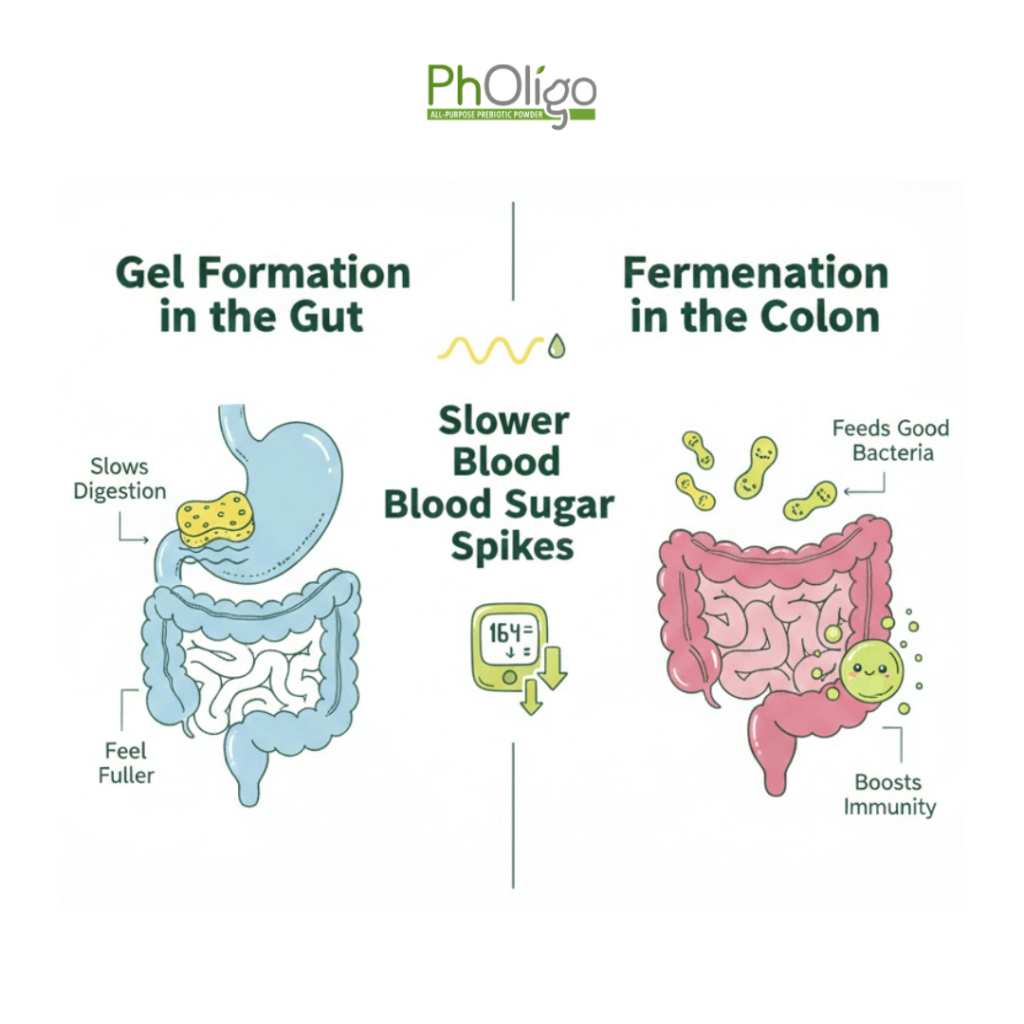
2. Slower Blood Sugar Spikes
Because digestion slows down, glucose enters the bloodstream more gradually. This is particularly helpful for people managing blood sugar levels or trying to avoid energy crashes[4].
3. Fermentation in the Colon
Once soluble fiber reaches the colon, beneficial gut bacteria ferment it, producing short-chain fatty acids (SCFAs). These compounds are essential for gut lining health, inflammation control, and immune function[5].
This process explains why soluble fiber is often recommended not just for digestion, but for whole-body health.
Soluble Fiber and Digestive Health
Digestive health is where soluble fiber truly shines. Regular intake helps:
- Support softer, more consistent stools
- Reduce digestive discomfort like bloating or irregular bowel movements
- Improve overall gut motility without harsh laxative effects
For many Filipinos who experience digestive stress due to diet changes, travel, or work-related stress, soluble fiber offers a gentle and sustainable solution. Unlike quick-fix remedies, it works by improving the environment inside your gut rather than forcing digestion.
Soluble Fiber and the Gut Microbiome
Your gut microbiome—trillions of bacteria living in your digestive tract—plays a massive role in digestion, immunity, mood, and even skin health. Soluble fiber is one of the primary fuels for these beneficial microbes.
When gut bacteria ferment soluble fiber, they produce SCFAs like butyrate, which:
- Strengthen the gut lining
- Reduce inflammation
- Support immune balance[5]
A diverse and well-fed microbiome is associated with better resilience against illness, something especially important in today’s fast-paced, high-stress environment.
Common Examples of Soluble Fiber

Soluble fiber occurs naturally in many foods, including:
- Fruits like bananas, mangoes, apples, and citrus
- Vegetables such as carrots and sweet potatoes
- Oats, barley, and legumes
- Certain root-based sources like beetroot
However, getting enough soluble fiber consistently from food alone can be challenging—especially if your diet is repetitive or low in fiber-rich plants. This is why some people turn to soluble fiber supplements or prebiotic powders to fill the gap. If you want a targeted marketplace guide to avoid the wrong rough fibers that trigger severe gas, look at our list of local foods for soluble fiber.
For long-term health, prebiotics act as quiet protectors—working daily to reduce risk factors associated with cancer development.
PhOligo: A Practical Way to Increase Soluble Fiber Intake
PhOligo is an all-purpose soluble fiber derived from natural plant sources like beetroot, making it a practical option for people looking to increase their soluble fiber intake without drastically changing their diet. As a well-formulated soluble fiber supplement, it offers a convenient and consistent way to support gut health, especially for individuals who struggle to meet their fiber needs through food alone.


High-quality soluble fiber products like PhOligo are typically:
- Easy to mix with water or food
- Gentle on the stomach
- Designed to feed beneficial gut bacteria
When choosing a soluble fiber supplement, it’s important to look at sourcing, purity, and how well it fits into daily routines. A product that’s designed for everyday use can be especially helpful for people managing busy schedules, long commutes, or irregular meal times.
Why Soluble Fiber Is Important for Overall Health
Beyond digestion, soluble fiber supports multiple aspects of health:
- Heart health by helping manage cholesterol levels[6]
- Blood sugar balance through slower glucose absorption[4]
- Weight management by increasing fullness and reducing cravings[1]
- Immune health via a stronger, healthier gut microbiome[5]
In many ways, soluble fiber acts as a foundational nutrient—one that supports systems throughout the body rather than targeting just one issue. If you are dealing with constant cravings and want to know how this nutrient helps with weight management, you can read our guide on how to lose weight naturally without starving your body.

Soluble Fiber Benefits: What This Means for Your Daily Health
Understanding what soluble fiber is allows you to make smarter, more informed decisions about your nutrition and gut health. Whether through food, lifestyle changes, or carefully chosen supplements, prioritizing soluble fiber can lead to noticeable improvements in digestion, energy, and overall well-being.
If you’re looking for expert guidance on soluble fiber, prebiotics, or how to support your gut health more effectively, consider reaching out to us, who specialize in this field. Personalized advice can help you get the most benefit—safely and sustainably—from soluble fiber as part of your daily routine.
Scientific Reference(s):
[1] Mayo Clinic. Dietary fiber: Essential for a healthy diet. https://www.mayoclinic.org/healthy-lifestyle/nutrition-and-healthy-eating/in-depth/fiber/art-20043983
[2] Harvard T.H. Chan School of Public Health. Fiber. https://www.hsph.harvard.edu/nutritionsource/carbohydrates/fiber/
[3] Cleveland Clinic. Soluble vs. Insoluble Fiber. https://health.clevelandclinic.org/whats-the-difference-between-soluble-and-insoluble-fiber
[4] Lattimer, J. M., & Haub, M. D. (2010). Effects of Dietary Fiber and Its Components on Metabolic Health. Nutrients. https://www.ncbi.nlm.nih.gov/pmc/articles/PMC3257631/
[5] Markowiak, P., & Śliżewska, K. (2017). Effects of Probiotics, Prebiotics, and Synbiotics on Human Health. Nutrients. https://www.ncbi.nlm.nih.gov/pmc/articles/PMC5622781/
[6] Gunness, P., & Gidley, M. J. (2010). Mechanisms underlying the cholesterol-lowering properties of soluble dietary fibre polysaccharides. Food & Function. https://pubmed.ncbi.nlm.nih.gov/21776455/

